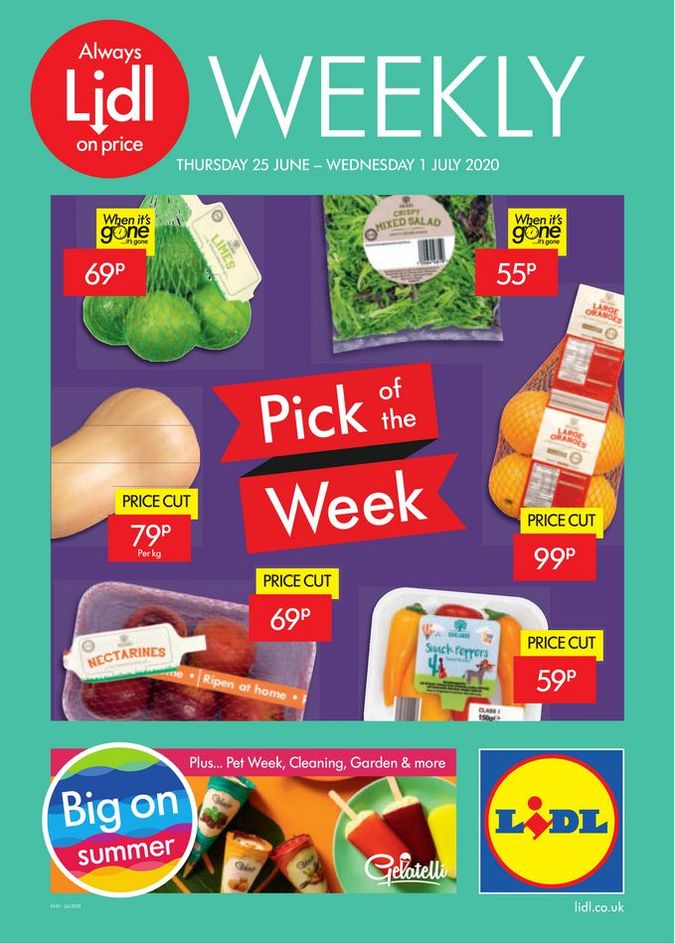
Tufte’s theory of small multiples involves the use of small images which collaborate together to develop a much larger image.
“Small Multiples reveal all at once, a scope of alternatives, a range of options” – Tufte (1990)
Examples of these can be found all around food advertising, especially in large chain supermarkets. In the example below, Lidl have produced another episode of their weekly magazine titled “Lidl Weekly”. This leaflet consists of multiple images of the food’s they have to sell, and more specifically, they focus on foods they have on offer during that week. Each week follows the same basic template which allows consumers to easily understand the information on display. Like each of Tufte’s theories in Envisioning Information, small multiples can be linked alongside colour too.
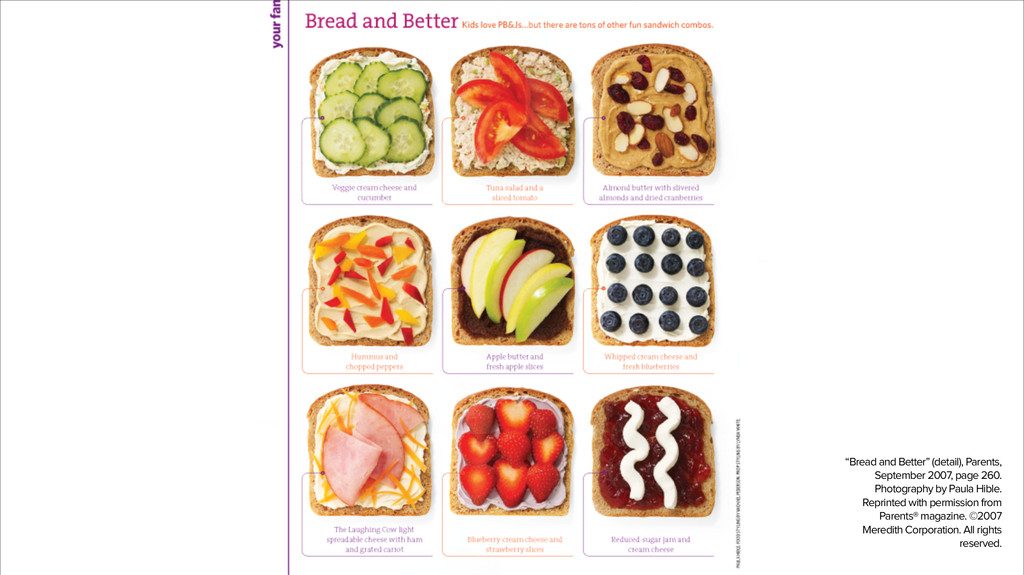
The second example, presents Small Multiples in a more concise and educational way. This is an excerpt from a book showing parents how to make more healthy and fun meals for their children. This image shows nine different types of sandwich which offer healthier alternatives to the a peanut butter and jelly sandwich, such as cream-cheese and cucumber laid out in an easy to consume way. Each element at its most basic form shows a sandwich, however because they differ it highlights Tufte’s theory. This is also supported by Stringham, who states that:
“If I want to define/show rhetorical heterogeneity (any relationship between objects) I should consider [Multiple things]. (Cont.) Although different, objects or images should all belong to the same ‘similarity’ or genre so that they represent changes in data.” Stringham (2012).
Bibliography:
Stringham, D. 2012. Small Multiples in the Visual Language of Instructional Designs. Thesis. Brigham Young University. Available online: https://scholarsarchive.byu.edu/etd/3105/ [Accessed 18/10/21]
Tufte, E. (1990). Envisioning information.